In Stock at Supplier. Ships within 5-10 Business Days.
82 ELITE Points earned with this purchase! Earn 250 for a $10 Reward!
Not an ELITE Member? Join ELITE here
Buy Now & Pay Later With


In 2007 Estonia faced a series of cyber-attacks on its cyber infrastructure, which caused widespread damage to the country’s economy, politics and security. However, despite this series of cyber-attacks, NATO did not apply Article 5 of the North Atlantic Treaty due to lack of consensus on applying Article 5 in the Estonian case. Although various approaches have been developed by scholars, there is no common application of international law in the United Nations Charter regarding cyber threats or attacks. Moreover, whilst there has been no common definition of ‘cyber terrorism’ by the international community, some scholars regard ‘cyber-attacks’ as acts of war. There is a paucity of literature dealing with the application of international law on cyber threats. A new Strategic Concept was adopted in 2010. Its most important development was to identify the significance of cyber threats to all NATO body members. When updating its own technology, the organization needs to be ready to defend itself against all kinds of asymmetrical warfare, whether from within or beyond its operational range. However, the terms of Article 5 of the North Atlantic Treaty were imprecise as to whether cyber-attacks can be regarded as a form of threat; for this reason, NATO accepted the case-by-case concept on cyber threats/attacks in terms of the application of Article 5 by the Wales Summit in 2014. Despite the fact that the Charter of the United Nations has not been revised, if its articles are broadly evaluated, cyber-attacks would be accepted as a threat or use of force against the territorial integrity of a state. The main purpose of this book is to analyze and evaluate what has been carried out regarding NATO’s operational arrangements and its Cyber Defense approach, and, secondly, to explain this in the lens of Game Theory. Furthermore, it will demonstrate why the web is paramount to NATO’s system-driven operations, and why it requires a Cyber Defense arrangement. In particular, the research endeavors to analyze Türkiye in this regard. The cyber-attack on Estonia in 2007 will be used by way of a case study to explain the development of threat perceptions, risks, international law, cyber security policies and application of Game Theory.
Ideal for readers interested in politics & government.
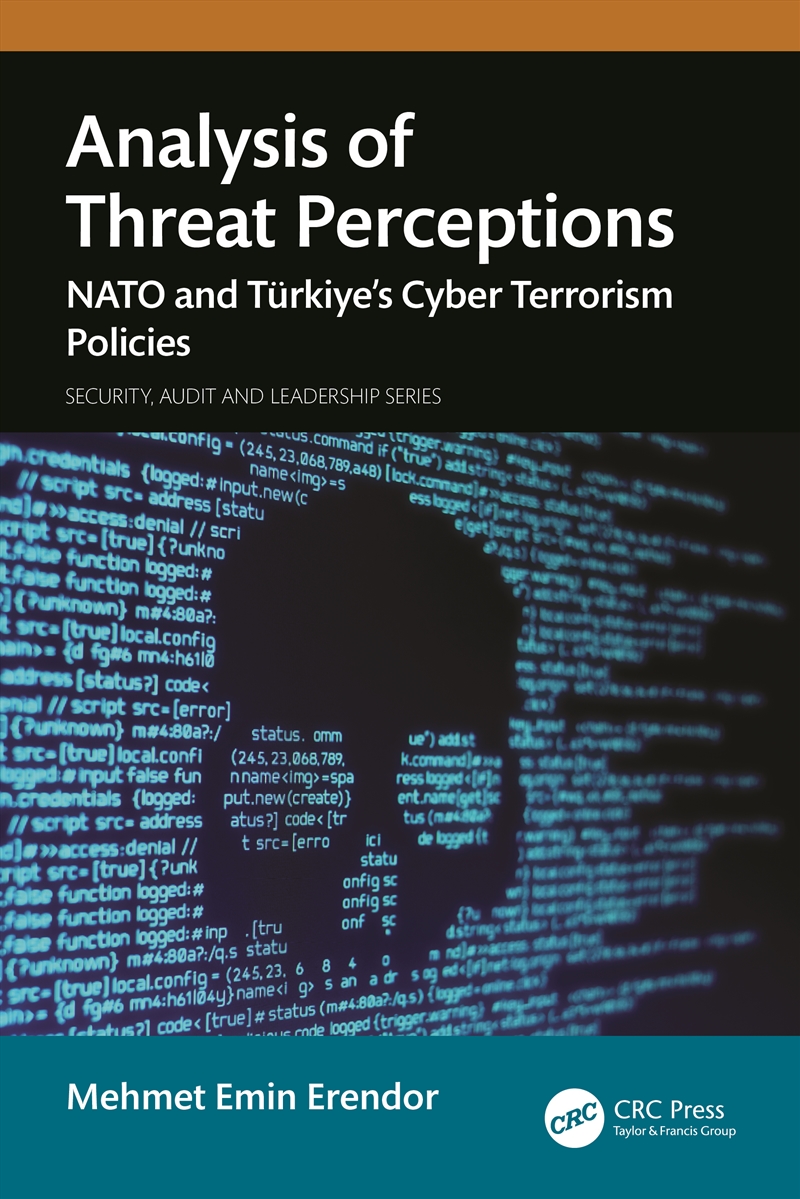
Title: Analysis Of Threat Perceptions Nato And Turkiye’S Cyber Terrorism Policies
Format: Paperback Book
Release Date: 11 Aug 2025
Author: Mehmet Emin Erendor
Sku: 3385095
Catalogue No: 9781032804422
Category: Politics & Government

 |
Help you find exactly what you are looking for, even if you aren't sure yourself! |
|
Track down the hard to find as quickly as possible - if it's available, we will get it! |
|
Deliver fast and friendly service to every customer. |
|
Provide you with the hottest, the latest and a great range. |
|
And if you're not satisified, you can exchange or with a receipt, get your money back - no questions asked! |
 Sign In / Register