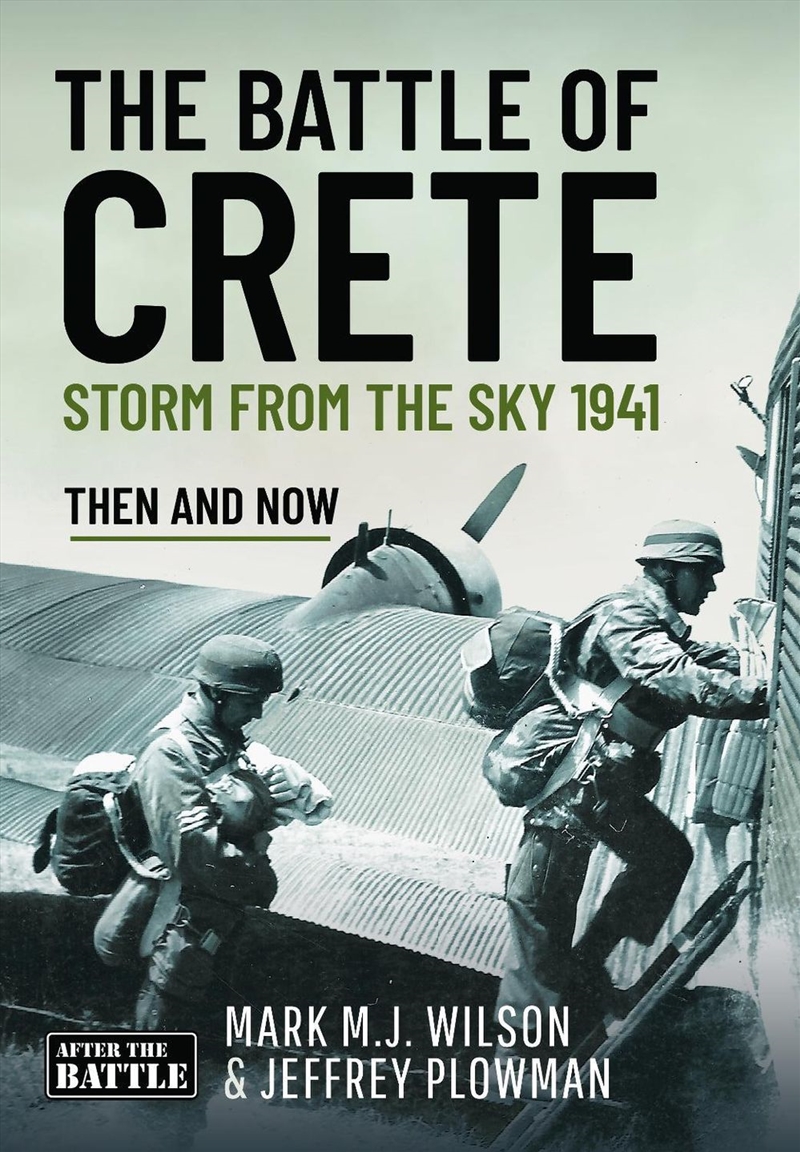
Operation Merkur, the German airborne invasion of Crete, is an iconic operation in military history. It pitched an elite airborne division against Creforce, a rag-tag force of British and Commonwealth escapees from Greece. The outcome to the Germans seemed assured. Yet, not only had the Germans underestimated the size of the defending force, they lacked an appreciation of the willingness to fight of the defenders, and had wrongly understood the reception they would receive from the Cretan civilians. To add to their woes their uniforms were ill-suited to the climate and other conditions they were to encounter on the island, and the dropping of their primary weapons in separate containers proved to be a grave doctrinal error. For many of the fallschirmjäger, the events of the first day ensured that this turned into a struggle for their own personal survival as the need for water and ammunition became paramount, while being hunted by Allied troops and civilians alike. It was a disaster and could have been fatal to the invader, except for the intransigence in the higher levels of command of their foes. Just how Creforce snatched defeat from the jaws of victory has been the subject of numerous books over the decades, with many recent accounts focusing on the interpretation or misinterpretation of the Ultra decrypts by the Creforce commander, New Zealander Major-General Bernard Freyberg. Using just a small proportion of the wealth of photographs taken during the invasion, many by the invading German forces, along with modern day comparisons or contextual images of sites of importance of the battle, from Australian, British, German and New Zealand official and private sources, the authors place the location of these images in their proper settings and add a new perspective to the story of this most famous airborne operation of the Second World War. AUTHORS: Jeffrey Plowman is a research biochemist by profession who has had a keen interest in military history for over 45 years. He has made a special study of New Zealand armour and armoured units, extending his interest into the operations of the 2nd New Zealand Division in the Mediterranean theatre in World War II. He has published over twenty five books on these subjects and co-authored a numerous articles in After the Battle and Wheels and Tracks magazines. He has published four books with Pen and Sword: War in the Balkans: The Battle for Greece and Crete 1940-1941, Monte Cassino. Armoured Forces in the Battle for the Gustav Line, Greece 1941: The Death Throes of Blitzkrieg and Tank Attack at Monte Cassino. The Cavendish Road Operation 1944. Mark M.J. Wilson is an Associate Professor in Supply Chain Management at Lincoln University in New Zealand and is also a keen amateur military historian focusing especially on the New Zealand forces in both World Wars. Mark has conducted a number of battlefields tours with a large number of clients to places such as Italy (the Battles of Monte Cassion and Orsogna), Turkey (Gallipoli) and has also visited the Crete battlefields on five separate occasions. Mark knows Crete and its people well and has an extensive library of all the major treaties on the subject, as well as artifacts and personal accounts of veterans and local civilians. Mark has published over 75 peer reviewed international academic journal articles and papers, as well as historical booklets. 180 b/w illustrations
Title: Battle Of Crete: Storm From The Sky 1941: Then And Now
Format: Hardback Book
Release Date: 01 Dec 2026
Author: Mark M. J. Wilson
Sku: 3740303
Catalogue No: 9781036131142
Category: History




 Sign In / Register