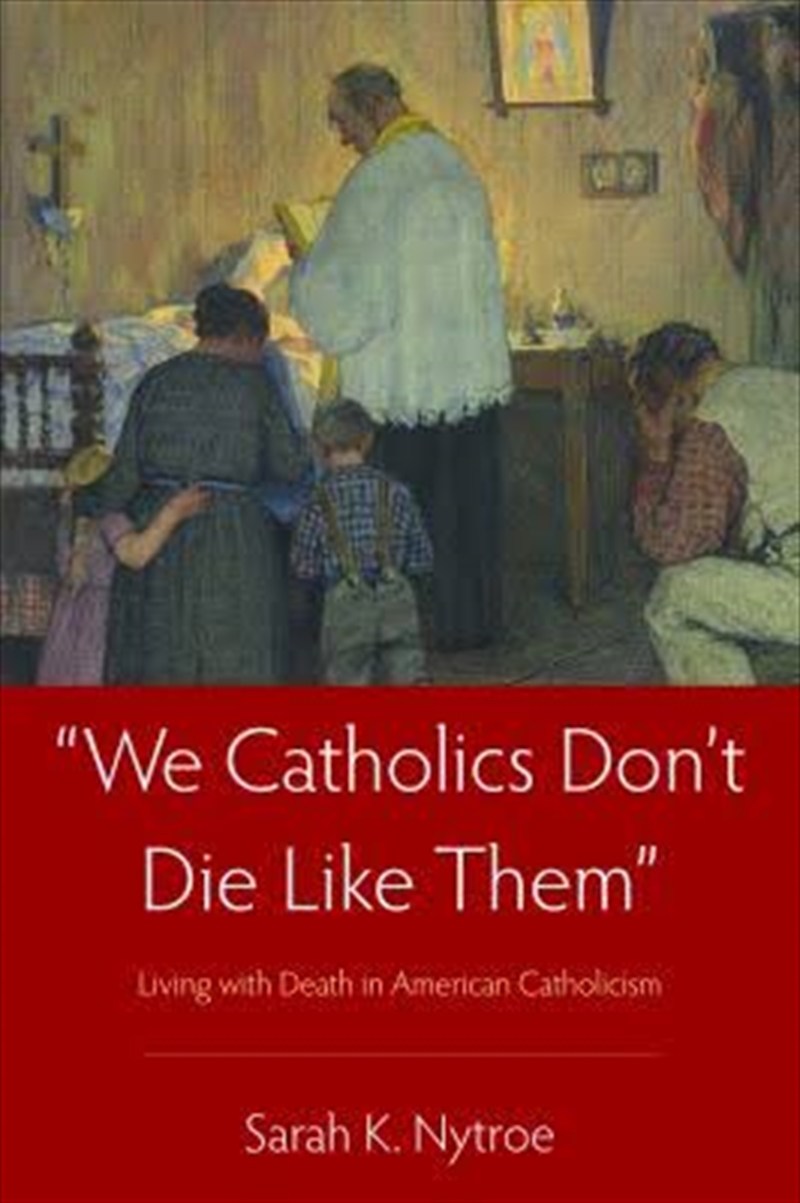
We Catholics Don't Die Like Them by Sarah Nytroe is a Religion & Beliefs Hardback Book. We Catholics Don't Die Like Them is the study of a minimally explored topic in American religious history, that of the Catholic approach to death and dying in the first half of the 20th century. Moreover, it advances scholarly understanding of three interrelated themes: cultural and social views of death and practices of dying; the Catholic religious culture and experience before the Second Vatican Council; and the relationship between Catholicism and modernity. While historians and scholars have explored these themes independently, this study seeks to draw them together in a manner that has yet to be fully considered. Finally, the study is grounded in a rich body of primary sources, the everyday religious literature produced to sustain the good death among Catholics. First, scholars from various disciplinary backgrounds, including history, have studied sociocultural attitudes about death and experiences of dying, those of both the past and the present. Those historical studies that examine death and dying do so through the lens of the Protestant religious culture and experience, giving limited to no attention to American Catholicism. Studies that have examined the Catholic approach to death and dying primarily focus on beliefs and practices in the medieval to early modern Church. Rarely have scholars extended the narrative into the modern period, especially the 20th century United States. This scholarly silence is surprising considering that historians have increasingly examined multiple dimensions of American Catholicism and the dynamic relationship between the institution and the "people in the pews." This study seeks to draw attention to this feature of the American Catholic religious culture and how it paralleled other aspects of the pre-Vatican II Catholic culture. Lastly, historians have long studied the relationship between Catholicism and modernity. Numerous studies have examined the ambivalence that existed in the Church towards the ideas, values, and structures of modernity in the pre-conciliar American context. Institutional anxiousness about the influence of modernity permeated the religious culture and the everyday lives of practicing Catholics. Church authorities remained apprehensive about how modern ideas influenced the faithful's thoughts about death, how they died, how the living supported the dying in their last hour, and how they remembered the dead. This sense of anxiousness emerges in the content and tone of the religious literature produced for Catholics, and yet, historians have yet to fully explore this feature of the relationship.
Title: We Catholics Don't Die Like Them
Format: Hardback Book
Release Date: 08 May 2026
Author: Sarah Nytroe
Sku: 3630734
Catalogue No: 9780813240800
Category: Religion & Beliefs




 Sign In / Register