Backorder - 15 - 30 days. BACKORDER
133 ELITE Points earned with this purchase! Earn 250 for a $10 Reward!
Not an ELITE Member? Join ELITE here
Buy Now & Pay Later With


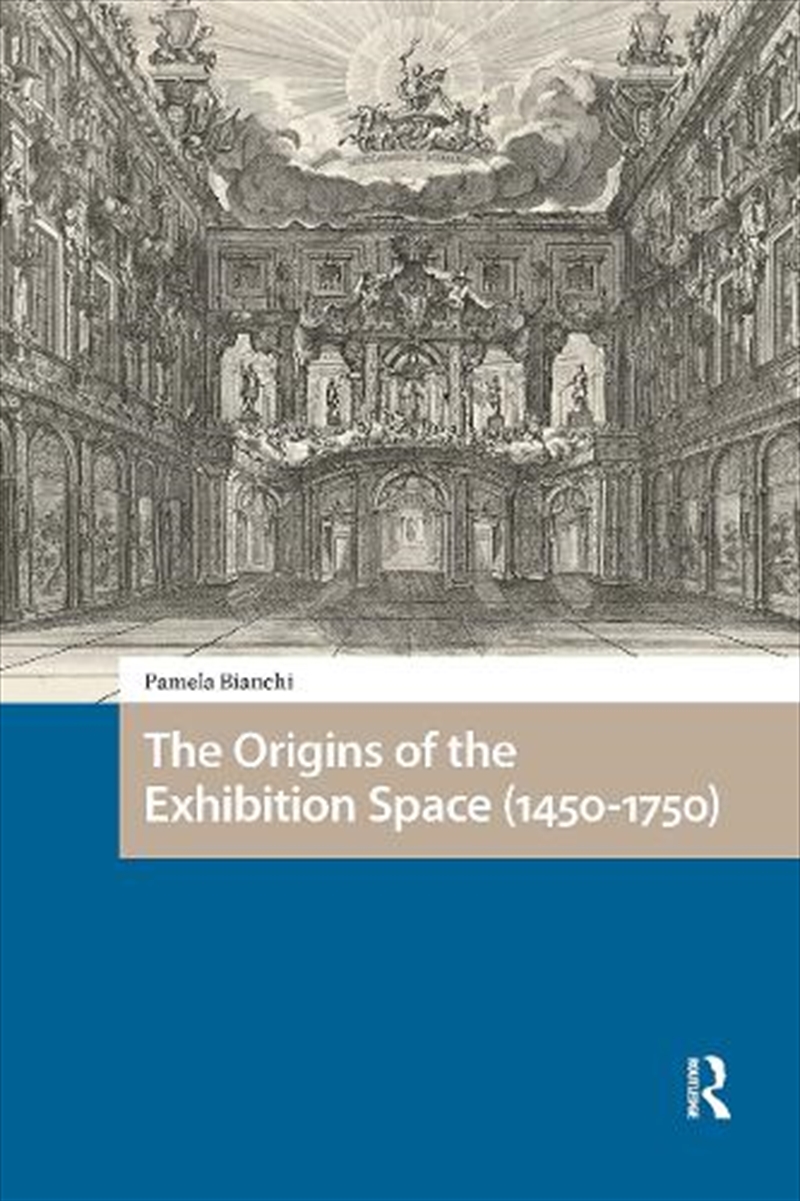
Before the first purpose-designed exhibition spaces and painting exhibitions emerged, showing art was mainly related to the habit of dressing up spaces for political commemorations, religious festivals, and marketing strategies. Palaces, cloisters, façades, squares, and shops became temporary and privileged venues for art display, where sociability was performed, and the idea of exhibition developed. What were those places and events? What aesthetic, cultural, social and political discourses intersected with the early idea of exhibition space? How did displaying art shape a new vocabulary within these events, and conversely, how have these occasions conditioned exhibiting practices? This book traces the origins of the exhibition space by studying its visual and written imagery in the early modern period. It reconsiders events and habits that contributed to shaping the imagery of the exhibition space, and to defining exhibition-making practices, exploring micro-histories and long-term changes.|Table of Contents,Acknowledgments, 1. INTRODUCTION, 1.1 Reasons for a Research, 1.2 Topics, Frames and Methodology, 2. Main Topics, 2.1 The Topoi of the Exhibition Space, 2.2 From the Act of Showing to the Idea of Exhibiting, 2.3 Depicting the Exhibitions, 2.4 Early Exhibition Design Precepts and Treatises, 3. (Domestic) Interiors, 3.1 Dressing Up Environments. From Representative Spaces to Exhibition Rooms, 3.2 Aesthetic Promenades in Italian Noble Palaces, 3.3 Dutch and Venetian Burghers' Dwellings, 3.4 A Proper Place for Artefacts, 3.5 Setting-Up the Collections, 3.6 Directing the Viewers' Gaze,*Spaces in Between,*Ubi Papa, Ibi Roma. Furniture and Display Apparatus, 4. (Public) Exteriors, 4.1 Gardens, Outer Loggias and Inner Galleries, 4.2 The City: a Stage to Display Ceremonies, 4.3 Religious Spaces for Early Exhibitions, 4.4 Transitional Space for Exhibition Fairs in Florence and Venice, 4.5 Other Venues of Exhibiting. Italian Botteghe and Northern Panden, 4.6 Alternative Exhibition Spaces: Eighteen-century Paris, 5. Conclusion, 5.1 The psychology of the display, Bibliography,List of Illustrations, Index.|1.The originality of the subject: No research until now has ever devoted a volume to the origins of the exhibition space in the early modern era. 2.Interdisciplinary approach: The study makes use of a wide range of contextual and theoretical resources and combines art history with the history of exhibitions, collections and architecture, placing the research in the social and cultural context of the time. Such an approach portrays a complex framework and demonstrates how the issue of the exhibition space is not simply attributable to a problem of contexts, but to a multiple and polyphonic research field which contributes to highlighting its scientific interest. 3.Contemporary methodology: While focusing on the early modern period, my research takes advantage of a contemporary methodology of analysis and a vocabulary that not only takes the book away from the typical volume of art history but sets the question within a current problem instead, such as that of the exhibiting, making places of art theoretical means for analysis and understanding of art history.
Title: The Origins Of The Exhibition Space (1450-1750)
Format: Paperback Book
Release Date: 01 Dec 2025
Type: Pamela Bianchi
Sku: 3532802
Catalogue No: 9781041188599
Category: Architecture

 |
Help you find exactly what you are looking for, even if you aren't sure yourself! |
|
Track down the hard to find as quickly as possible - if it's available, we will get it! |
|
Deliver fast and friendly service to every customer. |
|
Provide you with the hottest, the latest and a great range. |
|
And if you're not satisified, you can exchange or with a receipt, get your money back - no questions asked! |
 Sign In / Register